
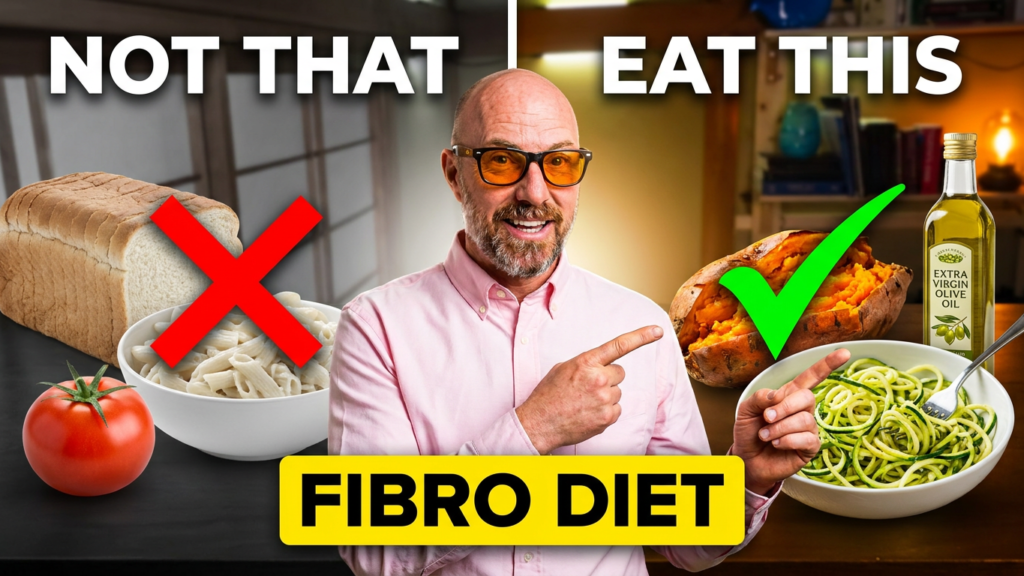
If you’re one of the millions living with fibromyalgia — wrestling with chronic pain, fatigue, and brain fog — the single most powerful lever you can pull is sitting right on your plate. After two decades working with fibromyalgia patients, I’ve watched diet make or break recovery time and time again. Some foods quietly keep the inflammation cycle turning; others help the body finally settle and repair.
The simple answer is a super-clean diet. But “clean” isn’t specific enough for fibromyalgia, which needs extra attention because of its chronic-pain nature. That’s where the fibro diet comes in: a real, sustainable way of eating designed around your symptoms, not a one-size-fits-all trend like keto, carnivore, or Atkins.
My Biggest Mistake
Twenty years ago, I leaned heavily on natural medicines — fish oil, boswellia, turmeric — and underestimated diet. When a patient asked, “I have a wedding in four weeks, can I relax on the alcohol and cake?”, I’d say a little should be fine. I didn’t want them missing out. But I learned the hard way: to reach a genuinely pain-free, energetic, symptom-free life, patients had to fully embrace the diet — and I had to be tougher about it.
Foods That Fuel Fibromyalgia (And What to Eat Instead)
The fibro diet removes the foods that drive inflammation, disrupt digestion, and worsen brain fog. Grab a pen — here are the big ones.
Nightshades → safe vegetables. Tomatoes, white potatoes, peppers, and eggplant contain solanine and other glycoalkaloids that appear to aggravate pain in a large share of patients. Swap potato for sweet potato, and tomato sauce for a homemade “nomato” sauce of cooked carrot, beet, onion, garlic, apple cider vinegar, and coconut aminos, blended smooth.
Grains → root vegetables and vegetable rice. Gluten and wheat carry lectins and amylase-trypsin inhibitors that can stir up the gut-immune system. Use cauliflower or parsnip rice, zucchini or sweet-potato noodles, and quinoa or cassava flakes for porridge. For baking, lean on coconut, cassava, and arrowroot.
Refined sugar → natural sweeteners. Processed sugars spike blood glucose and, cooked with bad oils, form advanced glycation end products (AGEs) that promote inflammation. Reach instead for small amounts of maple syrup, date paste, or raw honey — and plenty of whole fruit.
Eggs → plant binders and gelatin. For some people eggs are a trigger; cut them out for a while, then reintroduce later to test. Bind meatballs with gelatin, and bake with applesauce, mashed banana, or a baking-soda-and-vinegar lift.
Processed packet food → homemade food. “Healthy”-sounding products often hide seed oils, additives, and preservatives that keep inflammation simmering.
Animal dairy → dairy alternatives. Casein, whey, and lactose are common sensitivities. Use coconut, almond, or tigernut milk, and check coconut yogurt for added sugar.
Cacao → carob. Chocolate bundles sugar, milk, and high-oxalate cacao together — and oxalates are linked to inflammation and mast-cell activation. Make carob “chocolate” with coconut butter, carob powder, and a touch of maple syrup.
Nuts → seeds and tigernuts. Peanuts (a legume) are a frequent allergen; many tree nuts are high in oxalates and lectins. Tigernuts, pumpkin seeds, and roasted coconut chips fill the gap.
Also swap legumes for nutrient-dense root vegetables and meats; vegetable oils and margarine for ghee, tallow, olive, or avocado oil; coffee for chicory or dandelion root; dried fruit for fresh; and alcohol for kombucha, soda water, or switchel.
How to Start
Don’t overhaul everything overnight. Replace one pantry item at a time as you finish it, swap in the alternatives that resonate, and track your symptoms as you go. Reintroduce questionable foods later, one at a time, to learn your personal triggers. The goal is simple: a pain-free, energized body and a clear head.
A Note on the Evidence
Fibromyalgia is highly individual, and much of the research below comes from small or uncontrolled studies. These findings are promising rather than definitive, and an elimination-and-reintroduction approach — ideally with guidance from your doctor or dietitian — is the most reliable way to find what works for you.
Take the Next Step
If you’re tired of guessing what’s wrong and want real answers for your health challenges, the right tests can make all the difference. A skilled practitioner can help you navigate the results and build a tailored path to recovery.
Ready to reclaim your energy? Schedule a consultation with a functional medicine expert or continue learning about your options to take control of your health.