
Most people expect to feel a little slower after a big lunch. But if eating reliably turns your thinking to static, and you live with fibromyalgia or chronic fatigue, something more specific is going on. In my experience it comes down to one of four drivers, and the clock is your best diagnostic tool. Note when the fog arrives, what you ate, and what else flares with it, and the pattern usually reveals itself.
Why it hits harder with fibromyalgia and chronic fatigue
A healthy brain has reserve. It can absorb a histamine load, a glucose dip, or a sluggish digestive system without much noticeable change. Chronic pain and fatigue drain that reserve, so smaller disturbances produce bigger symptoms. Cognitive dysfunction (“fibrofog”) is one of the most consistently reported features of fibromyalgia for exactly this reason.
Perimenopause and menopause add another layer. Fluctuating oestrogen influences histamine breakdown, insulin sensitivity and gut motility simultaneously, which means the four causes below rarely appear alone. They stack.
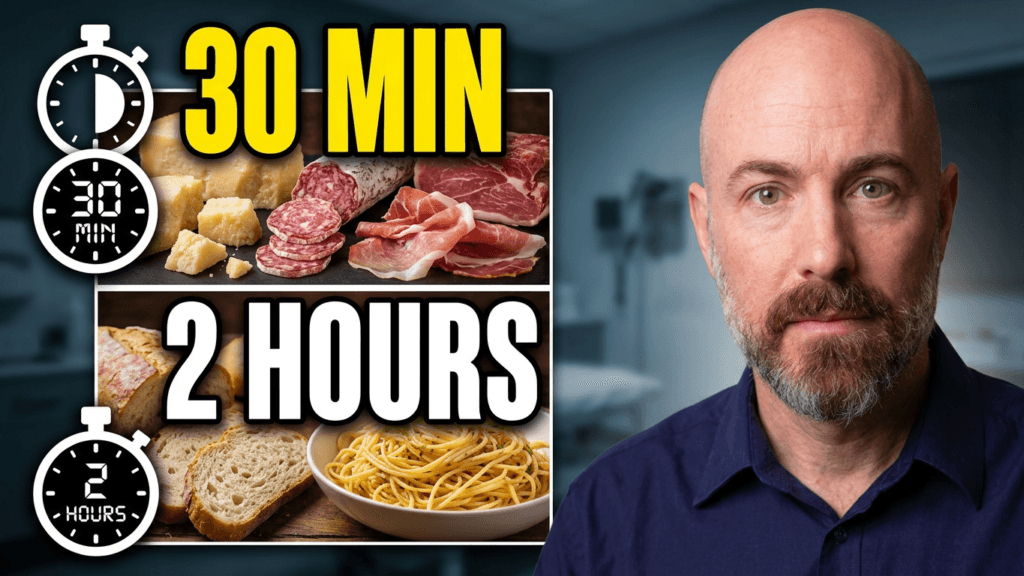
Pattern 1: Fog within 30 to 90 minutes, often with flushing or headache
Likely driver: a food reaction, and often histamine rather than a classic intolerance.
Gluten and dairy are the usual suspects people name, but when the fog arrives with facial flushing, a headache, a pain flare or an odd “hungover” sensation, histamine deserves attention. Histamine intolerance is common in fibromyalgia and tends to worsen as oestrogen fluctuates.
The telltale sign is inconsistency. A meal is fine on Monday, but the leftovers on Wednesday knock you flat. That is because histamine accumulates. Aged cheese, wine, cured and smoked meats, fermented foods and anything reheated from the day before all add to the load. So do poor sleep, stress, certain medications and your menstrual cycle phase. The meal is simply the last drop in an already full bucket.
What helps: Keep a two-week diary that records food, symptoms, sleep and stress together. Then run a structured elimination, one food group at a time, with deliberate reintroduction. Guesswork rarely finds the trigger; good records do.
Pattern 2: Fog with bloating, reflux or irregular bowels, regardless of what you eat
Likely driver: digestion itself.
If the fog is not tied to any particular food but comes with bloating, burping, reflux or a bowel that will not settle, the problem is probably upstream. When food is not properly broken down, gut bacteria ferment it, producing byproducts such as endotoxins and D-lactate that reach the brain via the gut–brain axis and cloud thinking directly.
Stomach acid and digestive enzymes decline with age and chronic stress. Years of acid-suppressing medication, antibiotics or regular painkillers, all common in women with fibromyalgia, accelerate the process. Research has also found altered gut bacteria and a high rate of small intestinal bacterial overgrowth in fibromyalgia patients.
Simple clues: Feeling full or heavy for hours after a modest meal, or bloating within half an hour of eating.
What helps: Eat slowly, stop before you are full, and have digestion assessed properly rather than reaching for another probiotic. Low acid, enzyme insufficiency and bacterial overgrowth each need a different approach, and the wrong probiotic can make bloating and fog worse.
Pattern 3: Fog one to three hours after a carb-heavy meal
Likely driver: blood sugar swings.
Sleepiness, afternoon sugar cravings, shakiness or irritability a couple of hours after pasta, bread or a sweet snack point to a glucose spike followed by a crash. As oestrogen falls, insulin sensitivity drops, so the same bowl of pasta you have eaten for years now produces a sharper rise and a deeper dip. Poor sleep and disrupted cortisol, near-universal in chronic fatigue, deepen the crash further.
The trap is that low energy drives you towards quick carbohydrates for a lift. You get twenty minutes of relief, then a harder fall. Many women ride this roller coaster all day without realising it is feeding their fog.
What helps: Aim for 25 to 30 grams of protein at each meal, add fibre and healthy fats, and eat carbohydrates last. A ten-minute walk after eating flattens the glucose curve remarkably well. On a bad day, even standing or moving on the spot for a few minutes helps.
Pattern 4: Fog that is constant but deepens after every meal
Likely driver: nutrient and energy gaps.
Digestion costs energy. If iron, B12, folate, magnesium, CoQ10 or thyroid function are already low, your cells cannot meet the extra demand, and you feel it as heavy limbs and slow recovery after eating. Women aged 45 to 65 are depleted far more often than younger women, partly from years of restricted eating, high stress and the demands of motherhood, and partly because a struggling gut (see Pattern 2) does not absorb what you eat. You can eat well and still be running on empty.
A “normal” lab result is not the same as optimal. Ferritin, B12 and thyroid markers are classic examples where you can be told everything is fine and still feel terrible.
What helps: Test thoroughly, ask to see the actual numbers rather than “normal,” and consider functional testing. While rebuilding, keep meals smaller and more frequent, and drink water before meals rather than during.
The quick self-check
| When the fog hits | What else happens | Think |
| 30–90 minutes after eating | Flushing, headache, pain flare | Food reaction / histamine |
| Any meal | Bloating, reflux, irregular bowels | Gut function |
| 1–3 hours after carbs | Sleepiness, cravings, shakiness | Blood sugar |
| Constant, worse after meals | Heavy limbs, slow recovery | Nutrient gaps |
It is usually a pattern, not a single cause
Poor digestion creates nutrient gaps. Nutrient gaps worsen blood sugar control. Blood sugar crashes drive cravings for the very foods that trigger reactions. This interlocking loop is why off-the-shelf supplements so often disappoint and why working through the picture systematically pays off.
Start with timing. Track it for two weeks. The pattern will show itself.
Curious about naturopathic care?
If this gave you a clearer sense of what a naturopathic consultation looks like, the video above goes through it in my own words. Whatever path you choose, the throughline is the same: a holistic look at your whole system, and a plan built around you.
Take the Next Step
If you’re tired of guessing what’s wrong and want real answers for your health challenges, the right tests can make all the difference. A skilled practitioner can help you navigate the results and build a tailored path to recovery.
Ready to reclaim your energy? Schedule a consultation with a functional medicine expert or continue learning about your options to take control of your health.
References
- Kravitz HM, Katz RS. Fibrofog and fibromyalgia: a narrative review and implications for clinical practice. Rheumatology International. 2015;35(7):1115–1125.
- Maintz L, Novak N. Histamine and histamine intolerance. American Journal of Clinical Nutrition. 2007;85(5):1185–1196.
- Minerbi A, Gonzalez E, Brereton NJB, et al. Altered microbiome composition in individuals with fibromyalgia. Pain. 2019;160(11):2589–2602.
- Reynolds AN, Mann JI, Williams S, Venn BJ. Advice to walk after meals is more effective for lowering postprandial glycaemia in type 2 diabetes mellitus than advice that does not specify timing. Diabetologia. 2016;59(12):2572–2578.
- Vaucher P, Druais PL, Waldvogel S, Favrat B. Effect of iron supplementation on fatigue in nonanemic menstruating women with low ferritin: a randomised controlled trial. CMAJ. 2012;184(11):1247–1254.